Thursday, January 15, 2009

Steppenwolf on DVD

I watched the film, Steppenwolf the other night and I enjoyed it more that I thought I would. It is often difficult for me to suspend criticism when I see a film version of a book so recently read. The magic theater scenes were dated by their early '70's special effects. It is so easy to achieve that solarized look in photoshop and I am not sure that I would want to.

What really excited me was the animated portion of the "Treatise" produced by Czech artist Jaroslav Bradac. So I will add Steppenwolf to my list of "Favorite Films with Collage" along with White Oleander (which has more assemblage than collage, actually) and The Day of the Locust.

Steve Earle and Tony Fitzpatrick

Back in Beverly when I used to tape off the radio, my favorite station (which only came in late at night) played some great music by Guy Clark, Townes Van Zandt and Steve Earle. I've just learned that Earle is a Tony Fitzpatrick fan.

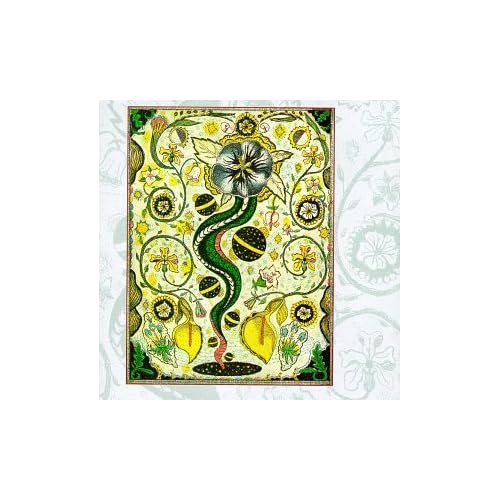
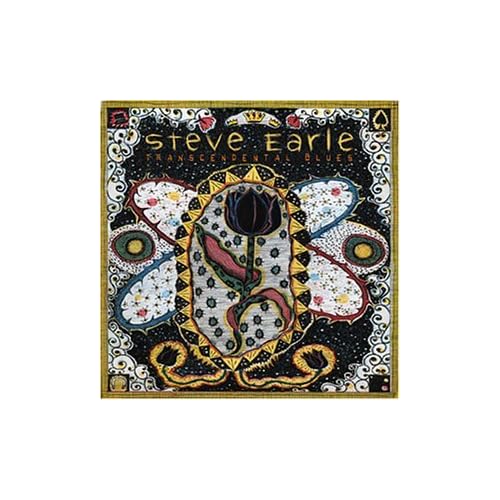
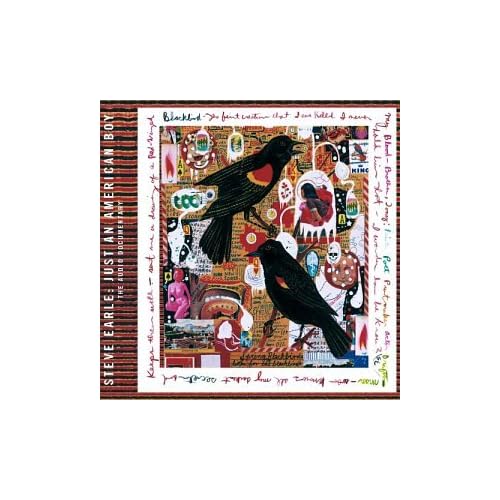
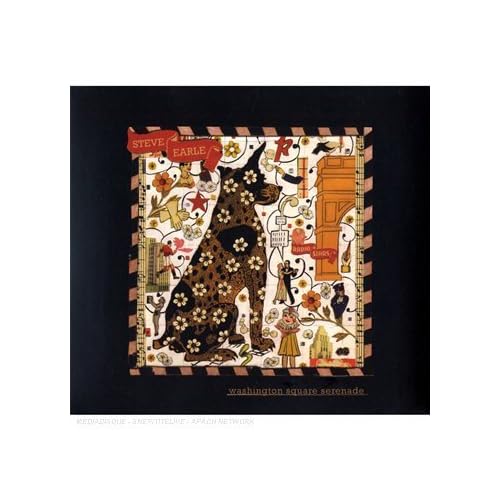
The cover art of nine or so of his music CD's are Fitzpatrick collages. There is I Feel Alright (1996) with snakes and flowers; El Corazon (1997) with a Mexican Loteria heart; The Mountain (1999) with magnolia; Transcendental Blues (2000) with a black tulip; Side Tracks (2002) with a star; Jerusalem (2002) with snake; Just an American Boy (2003) with a bird; Revolution Starts. . . Now (2004) with a star; Washington Square Serenade (2007) with a flowered dog; and for die hard vinyl fans, The Mountain will be released as an LP record on January 20th.

And a bit more Tony Fitzpatrick trivia. I read he had a part in Jonathan Demme's 1993 film Philadelphia. It's now #1 in my Netflix queue! (Update 22 Jan. 2009: He plays a bartender.)

Thursday, January 8, 2009

Steppenwolf and the Game of Life

Let me say right off it is a good thing that in my youth I did not care much for the novels of Hermann Hesse. Because now approaching 55 is the perfect age for me to be reading Steppenwolf for the first time. I think as a teenager I might have felt distain for the character of Harry Haller with his obsessive self-absorption, his breathing and thought exercises. But now I can identify with the loner in him so out of step with his times.

How clearly the musician, Pablo sees him: "You have often been solely weary of your life. You were striving, were you not, for escape? You have a longing to forsake this world and its reality and to penetrate to a reality more native to you, to a world beyond time. You know of course where this other world lies hidden. It is the world of your own soul that you seek. Only within yourself exists that other reality for which you long. I can give you nothing that has not already its being within yourself."

My favorite scene is that in which Haller confronts the man with no name sitting in front of the chessboard of life who takes the pieces of Haller's disintegrated self and arranges them. I am reminded here of the creation of collage as ". . . he passed his hand swiftly over the board and gently swept all the pieces into a heap; and, meditatively with an artist's skill, made up a new game of the same pieces with quite other groupings, relationships and enganglements. . . And in this fashion the clever architect built up one game after another out of the figures. . . Each belonged recognizably to the same world and acknowledged a common origin. Yet each was entirely new."

"This is the art of life. . . You may yourself as an artist develop the game of your life and lend it animation. You may complicate and enrich it as you please. It lies in your hands. Just as madness, in a higher sense, is the beginning of all wisdom, so is schizomania [the separation of the unity of the personality into multiple souls or numerous selves] the beginning of all art and all fantasy."

Friday, January 2, 2009

Clyfford Still Museum

This from the January 2009 issue of Art News -- Clyfford Still, born in the US of Canadian parents, proclaimed himself to be self-created and self-taught. He was described during his lifetime as "one of the strongest and original contributors to the rebirth of modern art in America." Still died in 1980 at the age of 75. He had kept almost all of his work (825 oil paintings or about 95% of his lifetime output) which after his death remained unseen in storage until recently. Now the paintings, along with some 1,500 works on paper, are to be housed in Denver in accordance with Still's final wish to bequeath his works to an American city willing to provide permanent headquarters exclusively for their exhibition and study. What more could an artist hope for than to have an entire life's work preserved for perpetuity in its own museum?

Saturday, December 20, 2008

Year In Review

Well, I don't know about you but I am ready to end this year right now this minute. I think I've been good about my attitude. I lost my temper a few times but I enjoyed myself doing it (I did not shoot anyone). I'm finishing up a massive cleaning binge. . . found all manner of cool whatnot to inspire new collages. Here's a few things I'm thinking about for 2009:
  1. Collage Pins - I got this idea from (and commented about it on) self taught artist so I have to follow through. There are witnesses.
  2. "Hell and Time Tied for Favorite" - Title of collage inspired by Gillian Welch
  3. Animation (cont.) - What a tangent this is turning out to be. I don't know where it is going yet but I will eventually figure it out. It's exciting to learn something new.
And I should give myself credit for my accomplishments in 2008:
  1. Acrylic Painting - I started painting in acrylics in March. I've explored painting on watercolor paper and canvas. I've created grid sub-structures using masking tape on canvas as a preliminary step to collage. I've also used acrylic glazes on the surface of collages to add color. And my last two pieces were what I would consider "mixed media" paintings on paper collaged to canvas.
  2. Collages - I completed 27 collages this year, more than any year previous. (2007 - 11 collages; 2006 - 14 collages; 2005 - 3 collages; 2004 - 16 collages) Well, I'm cheating a little because 5 paintings have been included in this year's count as well.
  3. Anita's Beads - I finally advertised my bead shop and have a Shop Directory ad coming out in the February issue of Bead & Button.
  4. Toad Hollow - Pages added to the web site for Minerals; Herbs, Incense and Essential Oils pages back up and revised.
  5. Animation - Began research to develop idea about creating animated collages.
  6. AnitaNH Weblog - I got a late start on this weblog business but here I am!
Of course there's lots of stuff I dropped the ball on, too. But I'll just roll the important items over to the 2009 List. As George Elliot said: "It is never too late to be what you might have been."

Thursday, December 18, 2008

Book of Secrets

I just sat down with the new Blick Art Materials catalog and a cup of Earle Grey (I drink Red Rose to get the neat little animals). On page 176 they show a great how-to for making a "Book of Secrets" with four drawer-like compartments made from match boxes. I really like this idea and as you can see, I have my little boxes all ready to go. Cover size will be approximately 4x4 inches. Thanks, Dick Blick.

Wednesday, December 17, 2008

Art Quilts

I just clicked over to visit my friend in Vermont at self taught artist where I learned about Nellie Durand and her wonderful quilts. Nellie's album page on the development of a design for a spiral themed quilt is worth a study for insight into the design process. Look how she transformed this wonderful dots fabric. She has a blog called Exquisite Corpse Textiles, and is a follower of Fibermania.

Nwahulwana

While I'm getting into good music here, I want to mention what is my favorite song of the year: Nwahulwana by the Mozambique's top singer, Wazimbo. The language is Ronga and I find the song is great for playing first thing in the morning to clear the energy in my shop. It's available on CD from Piranha Musik and you can check it out on YouTube. I first heard the song while watching the film "The Pledge" staring Jack Nicholson. But don't waste your money buying the movie soundtrack because Nwahulwana isn't included!

Gillian Welch

I watched The Revelator Collection on DVD four times yesterday! Gillian Welch's voice is just so fine and her songs (most written with musical partner David Rawlings) are sublime and haunting. Included also are three great cover tunes: Bob Dylan's "Billy," Neil Young's "Pochahontas," and Townes van Zandt's "White Freight Liner Blues." This film of performance clips from their 2001 tour made me realize that David Rawlings is not just some guy on guitar. Here they are on YouTube playing "Look At Miss Ohio."

I have four Gillian Welch CD's on Acony Records: Revival (1996), Hell Among the Yearlings (1998), Time (The Revelator) (2001), and Soul Journey (2003). They are all terrific, with Hell and Time tied for favorite.

Monday, December 15, 2008

Collage Paper Sorting


Look at that face. . . he knows he's the favorite cat!
Mica took possession of an empty box in the library this morning. I don't think he plans to relinquish his spot any time soon! I'm still in the middle of my major sorting and reorganization of vintage book pages, contemporary found images, plus book jackets and covers. I've used book covers in a couple of my collages: Curious? (the second half of my first Divorce Diptych) makes use of a nice one. And there are two in "I" Before "E". Book jackets are also fun to collect. I like the older ones that don't have a plastic-like coating. The paper is nice and thick, the color combinations are usually eye-catching, and you can find some unusual fonts. The word 'new' (or 'men' depending how you look at it) in Unequivocation is a nice example. And it wasn't until the dump yielded up the book Physical Attraction and Your Hormones that my second diptych A Sad Infatuation came together!

Sunday, December 14, 2008

Clay Animation

Michael Frierson's Clay Animation: American Highlights 1908 to the Present is an interesting read. Clay animation was made possible by the invention of plasticine around 1900. A precursor is the flip book of sequential drawings brought to life through the phi phenomenon: the optical impression of motion created when objectively stationary images are presented rapidly one after another. One of the earliest known women animators, Helena Smith Dayton (b.1879) produced "motion picture comedies in clay" and was written up in Scientific American (16 Dec. 1916). But by the 1920's, the cel system was the dominant mode of animation production. The amateur filmmaker, Leonard Tregillus (a chemist for Eastman Kodak) produced two notable clay animated films: "No Credit" and "Proem." Clay animation finally began a resurgence in the broadcast medium after television's first period of growth in 1948.

In the search for new children's programming, clay animation reestablishes an audience with Art Clokey's Gumby which first aired on The Howdy Doody Show on 16 June 1956. Children's advertising spawned name-brand recognition for toys beginning with Mattel's "Burp Gun" released for Christmas 1955. Clokey credits avatar Sathya Sai Baba with Gumby's later comeback in the 1980's. "Some models had the Sanskrit word for love emblazoned on the chest" [p122].

Clokey was a protege of Yugoslavian artist Slavko Vorkapich, best known for the experimental film The Life and Death of 9413, a Hollywood Extra (1928). Vorkapich applied graphic art principles to filmmaking. "Like lines, colors and sounds, different motions have different emotional values. . . there are many such fundamental expressive motions and their possibilities of combination are unlimited." In filmmaking, Vorkapich was a montage expert and contributed sequences to many popular films including 1937's The Good Earth and The Last Gangster. A montage can be defined as a panoramic effect in which the events covering a period of time are condensed to a succession of rapidly paced interlocking flashes. Vorkapich refers to it as "film ideagraphy."

In Clokey's opinion, Vorkapich "got down to basics. . . motion and the illusion of three dimensional objects created by use of shape, shadows, color and motion." The influence of Vorkapich is evident in the abstract animation of Clokey's early work titled Gumbasia (1955), interesting for its "visual shorthand of fundamental shapes." Clokey believed that a character's external design should directly objectify its inner state. His work is notable for his use of screen vectors: the angle and direction that a character moves through filmic space. Remember how Gumby was always skating across the screen diagonally on one foot?

Much is also written about the "claymation" artist behind the 1974 Academy Award winner Closed Mondays, Will Vinton. The book closes with a chapter on "new visionaries" of the 1990's (Bruce Bickford and David Daniels) and includes a bibliography and selected filmographies.

Burp Gun Digression
A bit of trivia about the Burp Gun from Images of the Child by Harry Edwin Eiss: "The Mattel Burp Gun became the first televised toy to become a sensational hit, selling more than a million, each priced at $4.00, by Christmas. . . The company even received a personal letter from then President Dwight D. Eisenhower, who requested a Burp Gun for his grandson, David." Here's a 1958 model now priced at $350.00 at Mom & Pop's Vintage Toys. I never had a Burp Gun but I did have this Flintlock cap pistol!

Cold Moon Morning

Here it is this morning, Sunday 14 December 2008 at about 7:00 am. The moon is still pretty full. How convenient that we had a full moon the night of the blackout. All the trees were casting shadows in the yard.
We lost quite a few dead trees that were standing across the meadow, and a bunch more across the street in front of the house. Limbs breaking sound like gunshots.
Here's my old friend covered with frost. I was thinking about Nicholas Roukes and "selective cropping" when I took this one!

Saturday, December 13, 2008

Another Nicholas Roukes Book

Before I delve into the new animation books, I want to mention one other recommended title by Nicholas Roukes. Acrylics Bold and New (Watson Guptill, 1990) is the perfect how-to guide to provide inspiration to someone like me who has no formal art training. The 5-page introduction provides a nice overview of the qualities and characteristics of acrylic paint including: how and when to apply gesso and varnish, the use of acrylic emulsions in collage including two transfer methods, and some tips on hard-edge painting. The bulk of the book consists of 64 experiments. Each experiment is a chapter covering a different composition, concept or technique illustrated by an acrylic painting. Chapters begin with a general how-to and definition of terms followed by a discussion of the painting and the specific application of the technique therein. Of particular interest to me are: Paint With Stencils, Integrate Transfer Images, Use a "Stage Set" Format, Combine Abstract and Figurative Motifs (love the example byRobert Hudson), Hybridize the Subject (ditto by James Marsh), Use Serialized Images, Use Selective Cropping, Compose with a Grid, and Use Geometrical Abstraction. Now that I've learned about visual closure, equivocal visual fields, figure/ground relationships and rhythmic transition I am ready to choose one of my favorite experiments and apply what I have learned. I think I will create a painting based on hybridization, and a collage composed with a grid.

James Marsh and Robert Hudson
James Marsh has a wonderful web site. Don't miss his print show for many clever examples of hybridization. And his fine art slide show features nice abstract designs, some based on dots. Others using flat stones remind me a little of Andy Goldworthy's work! Robert Hudson's work is somewhat elusive on the net, but you can see two of his assemblages on the site of the Smithsonian American Art Museum. You can also browse SAAM by artwork type. Collage yields 597 hits. . . oh boy!

Animation Hit List

Wow, I might need Evelyn Wood's help with this. I have a total of nine books on animation. I will list them all here and then describe each one in a separate post as I finish it:
  1. Ablan, Dan. Digital Photography for 3D Imaging and Animation. Wiley, 2007.
  2. Chapman, Jenny. www.animation: Animation Design for the World Wide Web. Watson-Guptill, 2002.
  3. Frierson, Michael. Clay Animation: American Highlights 1908 to the Present (Twayne's Filmmaker's Series). Twayne Publishers, 1994.
  4. Kerman, Phillip. Macromedia Flash 8 in 24 Hours (SAMs Teach Yourself). Sams Publishing, 2006.
  5. Milic, Lea and Yasmin McConville. The Animation Producer's Handbook. McGraw-Hill, 2006.
  6. Mohler, James L. Graphics, Animation & Interactivity with Flash 4.0. Delmar/Thomson Learning, 2000.
  7. Patmore, Chris. The Complete Animation Course: The Principles, Practice, and Techniques of Successful Animation. Quartro/Barron's, 2003.
  8. Priebe, Ken A. The Art of Stop-Motion Animation. Thomson, 2007.
  9. White, Tony. Animation From Pencils to Pixels: Classical Techniques for Digital Animators. Focal Press/Elsevier, 2006.